Friday, August 29, 2008

It Was All a Dream-Barack, King, and Hip-Hop


“They said this day would never come.”

Those were the first words of Barack Obama’s acceptance speech on January 3th, 2008, the night that he won the Democratic Party’s Iowa primary. Eight months later, those words are metaphoric for the perseverance of Black people in this country. It is a perseverance that was exhibited by the conscious citizens and dedicated activists of the Civil Rights Movement, and defined by the inspirational leadership and words of Dr. Martin Luther King, Jr. It is a perseverance that is emblematic in the work of the Hip-Hop Community and young Blacks today.

The discrimination, injustice, and inequality that people of the African Diaspora have faced in the over two hundred plus year history of the United States are among the ugliest scars inflicted in history. Yet these scars could not destroy the splendor seen in the spirit of these people.

The bravery of slaves to escape the oppression of slavery; the determination of abolitionists; the passion and fire of activist like Marcus Garvey or Malcolm X; the bravery of Freedom Summer volunteers to be beaten and bloodied for the sake of continuing the mission of voter-registration for Southern Blacks; the courage of Civil Rights leaders to march in Selma, Alabama and cross the Edmund Pettus Bridge, knowing the violence that waited for them. And through the pain, the character that Blacks have shown displays the beauty of their spirit.

It is this beauty that could allow rappers like Talib Kweli and writers like Ta-Nehisi Coates to describe the Black experience as “The Beautiful Struggle.”

This exact struggle, this exact experience, is what Dr. Martin Luther King, Jr described on August 28, 1963, in his “I Have a Dream” speech. One hundred years after the Emancipation Proclamation claimed to free Blacks from slavery, and set the course for their equality, Dr. King explained how “the negro still languishes in the corners of society… and still finds himself an exile in his own land.”

Yet while King eloquently and poignantly narrated how the rights that America claims to protect, and the promises it claims to ensure, had been intentionally and systematically denied to Black people, he also explained how it was not an undefeatable situation; for him, it was not a permanent condition. On this day, Dr. King championed a call to defeat this injustice. He announced to the world that a movement was underway, filled with citizens who would no longer stand for the indignity of racism to continue.

Most lasting though, was how Dr. King explained that this movement would be the fulfillment of a dream. A dream steeped in Blacks having equal rights; a dream where racism would be eliminated; a dream where Blacks would be apart of the American promise: “life, liberty, and the pursuit of happiness.” Martin Luther King, Jr wanted the future to have “the America dream.”

On the forty-fifth anniversary of Dr. King’s “I Have a Dream” speech, Barack Obama’s accepted the nomination as the Democratic Party’s Presidential candidate. In becoming the first Black to receive the Presidential nomination from a major political party, Obama embodies a piece of King’s dream.

In his nomination acceptance speech Obama laid out not only a political agenda, but a vision for a transformation of America. One that focused on Americans seeing their common humanity, and which highlighted that the “change” his campaign has focused on means developing a communal effort to make America’s promise available to all its citizens. This speech set forth a plan.

It is Barack’s ability to do grassroots organizing on a national level; his way of transforming words about tomorrow into actions we can do today; and his capability to make many believe that we are not bound to where we are at and that we can turn this society into what we want it to be, that makes Obama’s leadership apart of Dr. King’s dream.

And as Obama’s leadership attempts to continue Dr. King’s dream, it is the Hip-Hop community that can guide the change on ground.

The Hip-Hop community is the quintessential example of “the beautiful struggle.” The range of Hip-Hop music serves as a narrative that speaks about the post-Civil Rights Movement Black experience, through the voice of its youth. The music tells stories of pain, struggle, fun, isolation, poverty, success, exploitation, violence, coming-of-age, and sexuality. For many, the culture became a tool for survival; an outlet used to express the complicated dealings and circumstance a new generation was (and is) dealing with.

Hip-Hop is also intrinsically tied to the ideas of optimism, hope, and dreams. In its formative years, the music was seen to be nothing more than a fad. It was not viewed as viable. They said the day would never come when Hip-Hop would be more than a pasting trend.

A generation of young people believed in it. They saw its potential and worked not only for the art form to be respected, but for it to be sustained as well. They were not afraid to dream.

Now, the dream is a global cultural phenomenon, a respected musical platform, and a source of economic opportunity.

The strength of the Hip-Hop community is its ability to be innovative, creative, determined, and…to organize. Often the culture does not receive the credit it deserves for its ability to bring young people together.

Hip-Hop has an outstanding ability to disseminate information, spread a message, and organize itself. It is an art form that requires constantly being attuned to the latest cultural trends in urban communities, and to the work being done by a number of artist in the genre (regardless of whether they are famous or not). Hip-Hop fans are among the most technologically astute communities. Viral marketing, social networking, message boards and blogs are how members develop fan bases, share news, pass along information, and expand its audience. All of this shows a tremendous ability on the part of the Hip-Hop community.

In addition to this tremendous skill-set there is a political consciousness fermenting not just in “progressive” Hip-Hop circles, but in mainstream music too. This summer has seen Rap superstars Young Jeezy and (infamously) Ludacris both make politically-charged songs like “Obama is Here” and “My President is Black.” These songs show keen connectedness to the current political climate.

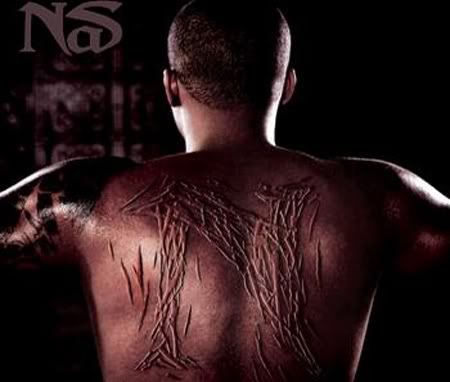
There is also historical awareness as well. West Coast artist The Game teamed with Nas to record a track entitled “A Letter to the King.” With Hip-Hop’s large youth audience, these are powerful messages.

During the Civil Right Movement and the Black Freedom Movement, young people were at the center of the work and vital to spreading the movement’s message. Groups like SNCC (Student Non-Violent Coordinating Committee) and CORE (Congress of Racial Equality) were founded and/or maintained by students and young people. They were inspired by leaders like King, Ella Baker, and others to organize and work for the cause.

It is undoubted that Barack Obama is in the mold of these great Black leaders. It is also undoubted that in this campaign he has seized an overwhelming majority of not only Black voters, but young voters as well; and this was mostly due to a campaign team filled with young people that utilized the internet and technology in ways never seen before in a Presidential election.

But the involvement of the Hip-Hop community could not only expand the audience, but also actively engage many of the young Americans who are the most furthest removed from the promise of America. Not only could this help them become politically involved and lay the seeds for change in some of the largest areas of concentrated Black poverty, but it could provide the leadership training and political mentorship that creates a structure for organizing. And while the Hip-Hop community has exhibited political awareness, how powerful, and how much more skilled, could it be with Barack Obama’s mentorship?

James Baldwin once said, “American history is longer, larger, more various, more beautiful, and more terrible than anything anyone has ever said about it.”

Barack Obama is a leader prepared to bring America past the terrible history that is still present. The day has come for those who have endured the beautiful struggle to be fully included. That will bring the dream to reality.

Tuesday, August 26, 2008

Let The Truth Be Told


Last night HBO showed a documentary entitled, "The Black List, Volume One." The program features Blacks from various backgrounds talking about their life, their memories, their hopes, their fears, their opinions, their present, and their future. It was candid in that it truly conveyed the variety of people from the African Diaspora, and allowed them an uninterrupted opportunity to just talk.

On the show, Chris Rock spoke about something his father use to share with him. His father said that "you can not beat the White man by a point or two; you can't have 6 and he have 5. You can't let the scorecard go to the judges, because you'll lose. You have to knock em out."

That story made me think of something my mentor Fordham University professor Dr. Mark Naison said this week. He cited how Barack Obama needs to follow the example Harry S. Truman and James Brown by tirelessly working. To be at every single place were you can find working-class people. He said this is how Barack can win over working-class America.

Chris Rock’s story made me think of Dr. Naison’s analogy: Barack Obama is going to have to knock out his opponent; and the only way to do this is to outwork him.

My other mentor, Dr. Brian Purnell, pointed out that he needs to out work him in a way that is meaningful. Dr. Purnell spoke about the work of Bobby Kennedy. He said

“Before his decision to run, Bobby spent time in some of the poorest, most struggling sections of not only the country, but the world!

As Senator Kennedy, before he was the official candidate, Bobby visited America's urban and rural impoverished ghettos; he even toured mines and slums in South America.

By the time King was murdered, Bobby was able to speak…to people who were enraged and hurt and they felt him in a way that would have been impossible if he did not learn to empathize, internalize, as well as intellectualize people's economic and social pain in an honest, direct way.”

Indeed, this comment brought me back to the work Senator Obama did before he was even a senator; when he was a community organizer in Chicago. And it reminded me what Obama needs to continue doing.

He needs to be in the housing projects of the Bronx; in Atlanta's or Michigan's troubled school systems; in the streets of urban Philadelphia and Baltimore; in towns like Flint, MI, or Youngstown, OH; in the communities of Liberty City, FL. Senator Obama needs to be there not for photo-ops, but to hear and (most importantly) feel the struggle.

What makes a leader great is their ability to feel their people's struggle enough that they can resonate it to any crowd, to any audience. And that feeling within them, becomes strong enough for the people to believe in them.

Barack's brilliance is that he attempts to convince all of us to be leaders, by trying to make us see the best within ourselves. Obama is trying to follow in the spirit of what a great leader does: Love us at our worst, because you want to help us be our best.

Racism, sexism, patriarchy, elitism----all of these show America at its worst. And all these things have been salient over the past twelve months of this Presidential election. It has been really ugly. But most illuminating, it shows we may not be as far past prejudice, inequality, discrimination, and segregation as we would like to believe.

On Charlie Rose yesterday, Connie Schultz of the Cleveland's Plain Dealer said how people that say "they don't really know Barack Obama," "is he patriotic," or "is he really one of us," are all code for race. For me, it sounds like "I don't know this Black man; and I don't trust him either."

For nineteen months Barack has been trying to transcend the idea of race. Even his Philadelphia speech attempted to directly face his own identity within America's racial construct, but to confront it in a way that allows us to move past it. And as Schultz evaluation points out, it hasn't quite worked out.

Obama can only attempt to inspire change. The rest is left for us: to really look inside ourselves, and examine our beliefs and behaviors.

In the face of mainstream press coverage that over the past ten days has ridiculously emphasized every negative and every doubt that exists about Barack's resonance with "working-class America" (AKA White people who are not convinced yet); in the face of still being bombarded with rhetoric about a Democratic candidate who lost already, but yet the media still harps on every single day; in the face of a Democratic political dynasty that is still visibly upset about their improbable lost during this campaign, and still will not exhibit a visible, sincere advocacy for the winner of the contest; in the face of all of this, last night Michelle Obama still found a way to give a exceptional opening night speech that exulted her roots, her husband, her political party, and even the unyielding Hillary Clinton.

She was truly inspirational.

And so tonight, my only hope is that Hillary Clinton is gracious. Gracious enough to humbly acknowledge her defeat head-on, to recognize the large constituency that still clings to her, and to be self-less enough to turn it into a sincere call to support Barack Obama.

Otherwise, she and the Clinton legacy will only mirror the very bitterness and resentment Barack pointed out in his March race speech.

Race is still an issue in America because of all the other issues that come along with it: prison-industrial complex, funding for public schools, etc. Race is still an issue because it underpins some of the foundational problems of this country dating back to it "founding fathers." Race is still an issue because it works at the intersection of so many of America's contemporary problems.

This election brings out the issues of the times, if you can look past the political squabbling and media rhetoric.

What we need from a President, what we need from our leaders, what we need in all our communities, are truth-tellers that help us see these issues. We need people who love us at our worst, because they want to help us become our best.

That's what we need in a President.

Monday, August 18, 2008

You Ain't Sayin Nuthin: Rap Music's Lost Message


"People thinking MC is shorthand for misconception"

Talib Kweli-"Definition"

Maybe sales are down because nobody wants to hear what you have to say...

Tuesday, June 3, 2008

Mr. Carter's Coming of Age?


"And next time you mention Pac, Biggie, or Jay-Z don't forget about me"

Lil Wayne-"Mr. Carter"

Pac, Big, Jay-Z, and Wayne...? Sounds blasphemous right...or wrong?

Does "Mr. Carter" mark Lil Wayne's "Coming of Age"? Is this his transformation from "Best Rapper Alive" to one of the "Greatest of All-Time?" And is the man arguably rap's G.O.A.T co-signing?

Lil' Wayne's come-up is almost like a folk legend now. He shoots himself while posing in the mirror; he goes to college; he teamed with DJ Drama to create the highly successful Gangsta Grillz mixtapes Dedication I & II; his infamous cup of "purp" (or "lean," "drank," "sizurp," or other names) and "smoke sessions"; the growth seen in 500 Degreez, Tha Carter I, & Tha Carter II; the incredible number of songs & guest appearances; and the acknowledgment that he kisses his Daddy in the mouth. It's excess meets success.

The success has made Wayne a Hip-Hop superstar. It's created what could be called a "cult" following, making him one of the most downloaded, listened, "googled," watched, talked about, cited, and sought artist in the game.

It also has made him a target of ridicule. His unusual rhymes, disjointed narratives, and stream-of-consciousness style either invokes praises of genius or calls of garbage. There are those who see it as his courage to be different; his ability to be creative in a way no other rapper has ever been able to; and the characteristics that make his "swag" among the best in the game.

Thus Tha Carter III is Lil Wayne's attempt to create the mainstream musical success that will transcend him to pop star status; yet also to prove beyond a doubt that Weezy F. Baby deserves to be consider not just one of the best rappers of the time, but one of the best ever.

For the rest of "Mr. Carter's Coming of Age?" Read at Real Talk NY

Monday, April 28, 2008

The Bell Has Been Tolled, Mainstream Hip-Hop Must Answer! A Call for the Mainstream Hip-Hop Community to become Political in the Wake of the Sean Bell


The Bell Has Been Tolled, Mainstream Hip-Hop Must Answer! A Call for the Mainstream Hip-Hop Community to become Political in the Wake of the Sean Bell

By Michael Partis

“If Malcolm or Huey had the outlets our musicians have today, it’d be global. I have to figure out a way to do it myself.”

Alicia Keys- “Alicia Keys Unlocked”

Blender Magazine-May 2008 edition

Inspired by Dr. Martin Luther King Jr.’s 1964 book, “Why We Can Not Wait”

When I saw Jay-Z, the biggest artist in Hip-Hop, could put out a record dissing NBA basketball player Deshawn Stevenson two days after the Sean Bell verdict, but yet could not put out even a statement on the case, I said enough.

Hip-Hop music and culture is an often criticized, highly stereotyped art form and cultural movement. Gangsters; ignorant; selfish; destroying the Black community; perpetuators of the word “Nigga;” and vulgar, incendiary rebels without a cause---these are among the many charges routinely hurled. And typically in the dead center of the attack are Black and Latino youth; and more specifically, the Black and Latino young man.

For all the racially-tinged hatred disseminated from the narrow-minded faction of the political right, or the equally narrow, grossly misinformed analysis of the Black conservative cohort (the John McWhorter’s and Stanley Crouch’s among others), there has been an identical amount of advocacy and support for Hip-Hop. Whether it be from religious, political, academic, or grassroots sectors, people like Kevin Powell, Rosa Clemente, James Braxton Peterson, David Kirkland, Cornel West, Michael Eric Dyson, Trica Rose, Joan Morgan and numerous others have articulately, comprehensively, and thoughtfully commented on the full spectrum of the music and culture. They have ardently and courageously defended it’s legitimacy to legions of Americans who see it as a one-dimensional, hedonistic, pesticide in America culture.

But now is the time for mainstream Hip-Hop to stand-up and defend the same community of folks who help create it, support it, and maintain it.

The claim of “We’re just rappers” and the like is no longer valid.

In a music and a culture that is heavily populated and controlled by young Black and Latino men who many times laud themselves as being the authentic voice of an urban Black experience that while is extremely harsh, vulgar, self-indulgent, and misogynistic but yet claims to be “real”---it is time to talk about this realness.

It is time to speak on a how the United States makes up less then 5% of the world’s population, yet has almost 25% of the world prison’s inmates. AND 1/9TH OF THOSE ARE YOUNG BLACK MEN.

During the 2000 and 2004 Presidential Elections we have seen Black votes be treated as if they were meaningless in Georgia, Florida, and Ohio. We have seen increasing attempts to demonize our largely Black African and Latin American immigrant population without understanding how our state-endorsed, government-supported, private- corporate sector’s role in globalization is helping to profit from and perpetuate, not address, this issue.

We have seen how the lives of Blacks in New Orleans, Mississippi, and Alabama were not primary but secondary concerns in the face and aftermath of Hurricane Katrina---and how we still have no national agenda to address the displaced peoples or comprehensively rebuilt their cities. We are in the mist of seeing historically Black sections of cities like Chicago, Flint, Detroit, Baltimore, Philadelphia, Newark, and Trenton suffering through staggering high school dropout rates (and correspondingly, significantly low high school graduation rates) and economic stagnation.

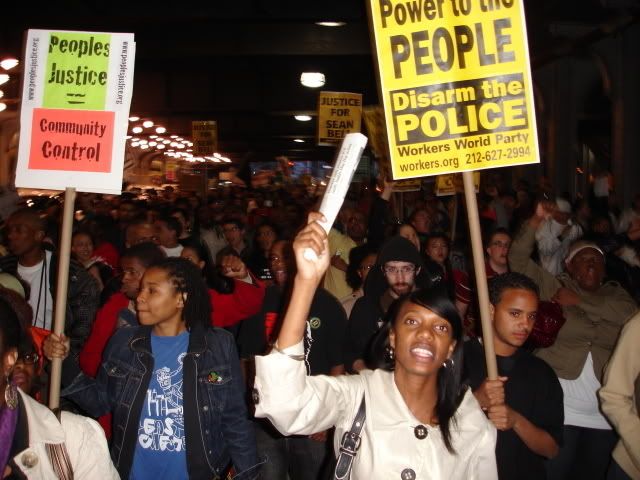
We have seen how the NYPD could stop the Bushwick 32 from going to a friend’s funeral. And now we see how no amount of bullets to an unarmed man warrants excessive force by the New York City Police Department…again.

Now we need mainstream Hip-Hop to talk about it. They need to tell America how they see it.

While R&B superstar Alicia Keys has come under great scrutiny for her comments about “Gangster Rap” in the May 2008 issue of Blender Magazine, the most profound statement she said has been lost. Keys talks about the women empowerment anthems of Aretha Franklin and the soulful, yet explicitly political songs of Marvin Gaye as being examples of the power music holds: the ability to impact society. She goes on to express how she wants her music to bridge the politically & musical gap in an effort to raise awareness on important societal issues.

It is in this spirit that I call out the most talented and successful Hip-Hop artist of our society to rise. Brothers and sisters are being killed, disrespected, and belittled to the point where many now are saying our lives are meaningless.

This is directed at your “favorite rapper” and your “favorite rapper’s favorite rapper.” It is a call to go against the inclination towards profit-driven commercialism and mass media appeal. It is a call to step away from the “music is just fun,” “music as a way to escape reality,” “we’re artist, not politicians,” explanations. It is a call in the mold of Dr. King and many Black leaders of the past to look beyond your image or your bank account and into the heart and soul of our society; to look at injustice and stand against it. It is a call to use our largest communication and cultural medium to talk about the pressing issues of our community right now. It’s time to break from our regularly scheduled programming, because our community is in a state of emergency.

It is not a call for the adults of Bakari Kitwana’s Hip-Hop Generation, or the activist of our past movements, or the Hip-Hop artist of today that are “underground” but making music in the “backpacker,” “conscious MC” tradition. This is a call for the biggest of Hip-Hop’s stars to stand up and say something. It is time to answer the call. Our people can not wait any longer.

We need our Hip-Hop stars to stand up beyond being artist, but as responsible men and women that are needed. Because right now, it’s bigger than Hip-Hop.

Michael Partis

http://my.rawkus.com/profile/ForeThought

michaelpartis@gmail.com

myspace.com/hiphopthought

http://michaelpartis.blogspot.com/

Wednesday, March 19, 2008

Unity's Great Inspiration and Complicated Path to Resolution-Commentary on Barack "A More Perfect Union" Speech


Michael Partis

March 20, 2008

Obama's rhetorical ability is among the most skilled ever. Indeed, his speech on forming a "more perfect union" was prophetic. It forces us to see and create a transformative agenda for uniting a divided America (a unity we desperately need to more forward), wrestle with the questions on how to address the methods of bringing us together, and deal with the socio-economic policy issues that needs intricate planning and analyze in order to address all citizens.

For Barack to clearly & unequivocally state that racism must be addressed not only by citizens but by the United States government was a legendary proclamation. He clearly named that racism still exists and that this directly causes and perpetuates inequality and injustice in American society; and cited how racism's historic practices has led to a continuation of systematic injustice & inequality. Barack clearly named Blacks, Latinos, Asians, and Native Americans as being apart of this racially "disadvantaged" group. These decisive statements from a legitimate Presidential candidate marks a moment many who were following Senator’s Obama’s campaigning were waiting for: for Barack Obama to take a stance on race relations in the United States.

Walking the tightrope of the political major party landscape is extremely challenging; which makes his speech all the more powerful. And by juxtaposing racial inequality with the struggles of White working-class and poor, Obama does an eloquent job of trying to show a divided nation is commonality.

Arguably, the most powerful message in the entire speech was not his words on racial unity, but his outright critique of corporate business practice. While it is not the first time he has put corporate business in the crosshairs, this was indeed is strongest message towards them. In fact calling out major corporate industry's employment practices was his boldest move, naming globalization and out-sourcing as the root of American losing jobs---not immigration or affirmative action. It is clear the most sought after vote in this election is that of the White male; and criticizing corporate capital puts the bull's eye squarely on that population. In an election where we are hearing how super-delegates will determine the Democratic nomination, where “electablility” is a critical factor, and the question of can the nominee turn "red states blue" seems to be the DNC's most pressing concern, Barack's critique will not put him in that electorate's good graces.

Barack's talk about multiracial coalitions, unity, commonality, addressing the division of race, reconciling the past, and putting people before profit sets forth a progressive agenda to heal America's racial scars, embrace a fuller democracy, and recognize a racial, ethnic, and cultural plurality that will characterize 21st Century America.

Questions still remain though. Some critical issues are:

Private vs. Public

-Barack said "separate but equal is NOT EQUAL," reiterating the assertion of Brown vs. Board of Education while stating that American schools are STILL racially segregated and unequal. Many of the elite Private schools at the elementary and secondary level---disregard on the collegiate moment for a moment--- involve systems of "legacy," elitism, privilege, and classism that pushes free-market societies to intense moral analysis.

Residential Segregation
-while America may hold growing multi-ethnic and multi-cultural areas, racial segregation is still stark in many neighborhoods. Even as the South Bronx sees an influx of Mexican immigrants, or the Grand Concourse section of the Bronx experiences a growing numbers of African immigrants adding to the areas number of African-American, Caribbean, Central American, and Latino/Latina populations---does the historically affluent Riverdale or Throgs Neck sections of the Bronx see the same change in demographics? America still has a racial inequality problem in residence. This will only make unity more difficult.

The Global Consequences of our Domestic issues

-Complicated systems of race, class, and gender privileges have split apart the country and severely impacted policy. While Obama's speech outlined the great work we have to do in addressing our country’s racial, ethnic, cultural, and economic issues, how does that affect American foreign policy? How do the ways we perpetuate injustice (through discrimination & racism) affect how we deal with the world?
-While Rev. Jeremiah Wright's comments may have been inflammatory and controversial, it points to a real foreign policy's issue; an issues that has been neglected by numbers of American Presidential cabinets post WWI---are we exploiting foreign countries, uplifting them, aiding, or augmenting their dependence on the "First World." What is our image to the rest of the world? And what are the real consequences of this image? While Senator Obama did not address specifics foreign policy measures in his speech, his "more perfect union" must think about healing the U.S.' relationship with sections of the global world. Because along with racism, sexism, and discrimination: imperialism has been one of America's biggest problems as well.

These remaining questions are not to criticize Obama for not addressing them, but to speak to how we have to analysis his agenda and ACTIVELY TAKE A PART IN IT. The greatness of Barack's speech is that it simply illuminates the complicated problems America faces IF it is to move towards a more just country.
--

Michael Partis
michaelpartis@gmail.com
myspace.com/hiphopthought
http://michaelpartis.blogspot.com/

Monday, March 10, 2008

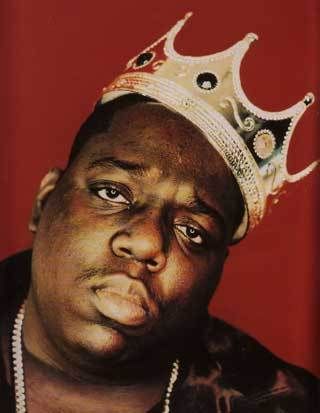
If Heaven’s Got A Ghetto, Tell B.I.G. Things Done Changed: The Legacy of The Notorious B.I.G. and Today’s Urban America

By Michael Partis


“Excuse me, flows just grow through me/like trees to branches, cliffs to avalanches/ It’s the praying mantis/ Deep like the mind of Farrakhan/ a motherfucking rap phenomenon.”

The Notorious B.I.G.- “The What”

Thursday, February 28, 2008

Take Me As I Am

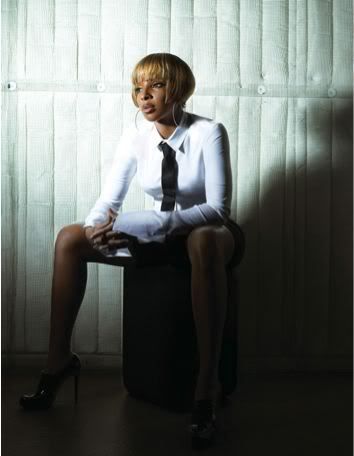
Take Me As I Am: Mary, MJB, or Nigga?

BY Michael Partis


Mary on her relationship with Oprah

“’Oprah was like, ‘I didn’t care for you, but it was when I got to know you that I realized who you were.’ Though Oprah is now a friend, Mary is not surprised at her opinion. ‘I understand somebody like her wouldn’t even feel me at all.’ Mary says. ‘I’m a nigga, you know what I’m sayin? So when she said that to me, I was like, ‘Thank you for that honesty.’”

Mary J. Blige
No Shame
VIBE February 2008


Mary J. Blige has always been known for her sincerity. Through her lyrics, words, and voice, she has made songs, interviews, and powerful vocal performances convey the Mary J. Blige Experience; an experience that has taken listeners and observers through a odyssey of pain, joy, tears, Real Love, life, No More Drama, Yonkers, hip-hop soul, ghetto fabulous, happiness, and everything else that makes her Mary. It is a life no one could fake, and has a part everyone within the Hip-Hop nation could relate to. That is why for over the past fifteen years, Mary has and continues to serve as a symbol of the Black female experience.

Mary’s symbol status is indicative of the consciousness of our post-Civil Rights and post-crack era generation. The socio-economical problems of our inner-cities were communicated through the medium of Hip-Hop music. It was a medium that elders, like C. Dolores Tucker and Calvin Butts, did not understand. The elders and the critics knew that the destructive violence expressed in Black-on-Black crime, or derogatory treatment of women and blatant sexism was wrong. But they didn’t understand why there were “Niggas With Attitudes;” or why they lived a “T.H.U.G. L.I.F.E;” or why “cash ruled everything around me.” They did not know why it was on the young people’s minds, and they did not know why they had to communicate it with rage, anger, pain, and vulgarity.

So it only makes sense that the greatest symbol of Black upward mobility and financial success over the past twenty-five didn’t understand Mary J. Blige. It’s only logical that even though they shared the same condition of being a successful Black woman in American society, Oprah Winfrey just didn’t “care” for MJB.

But what do a whole generation of young people of color who were not recognized by their elders, not respected by their elders, and not “cared” for by their elders see themselves as???”

They see themselves as “niggas”. And it is within this context that the word “nigga” has developed over the past twenty-five years.

A generation of young people (with African Diasporic lineage) that were marginalized and neglected developed their own voices and conveyed their own lived experience through Hip-Hop music and culture. They constructed their identity and developed an understanding of themselves and others through a self-appropriation of the word “nigger.” This successful (or attempted, depending on your opinion) self-appropriation of the word makes “nigger” transform into the vernacular “nigga.” You can only become the reflexive, communally-accepted “my nigga” if you show some understanding, comprehension, or connection with the post-Civil Rights Movement, post-Crack Era inner-city lived experience of those from the African Disaporic community. If you can’t connect, then you become the general, impersonal “that nigga” or “them niggas.”

Are there more usages than what I just gave above: absolutely. Is there tremendously more complexity in how the word is used than I explained above: absolutely. But do a large number of youth within the Hip-Hop culture use “nigga” within the context I stated above as a reference to their identity: absolutely.

This is why Mary J. Blige can understand why Oprah did not like at first; there is a whole generation of people who are Oprah’s contemporaries and in her cohort who don’t “care” for “niggas” either.

So if one of the most famous and successful Black artists of the past fifteen years sees herself as a “nigga,” there’s a whole generation seeing themselves the same way.

What are the consequences of this? And what are the consequences for what is becoming now a second generation of young people who construct their identity as “niggas?”

In his 1998 book “Yo’ Mama’s DisFUNKtional!: Fighting the Cultural Wars in Urban America” Robin D.G. Kelley takes social scientists and other academics and researchers to task for their singular, archetypal, stereotypical approach to looking at African Americans in urban environment in a chapter he called “Looking for the ‘real’ Nigga.” Hopefully the generation of C. Dolores Tucker’s, Calvin Butts’, and Oprah Winfrey’s who didn’t “care” much about young “niggas” before can rid themselves of the thinking Kelley talks about. And then they and the generation of Mary J. Blige (who grew up thinking of themselves as “niggas”), can come together to see how the poverty, sexism, racism, prison industrial complex, police brutality, and inequality in the American justice system that still plagues people of color in today society is making new “niggas” everyday.

Maybe then people would finally see that Hip-Hop didn’t create these problems. And Hip-Hop is certainly not creating these “niggas.”


Michael Partis
michaelpartis@gmail.com
myspace.com/hiphopthought
http://michaelpartis.blogspot.com/
http://my.rawkus.com/profile/ForeThought