Monday, April 28, 2008

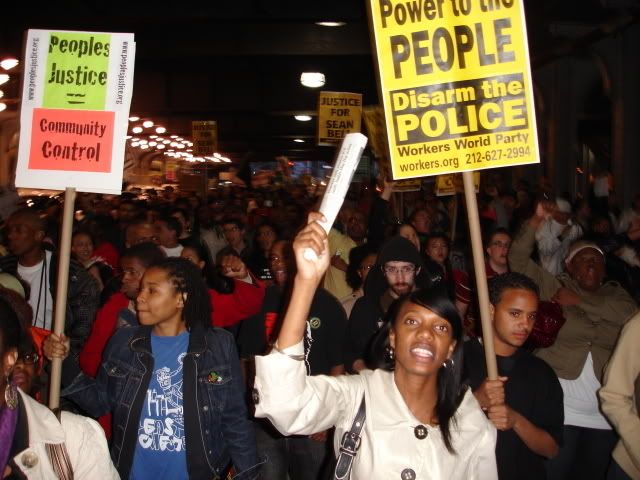
The Bell Has Been Tolled, Mainstream Hip-Hop Must Answer! A Call for the Mainstream Hip-Hop Community to become Political in the Wake of the Sean Bell


The Bell Has Been Tolled, Mainstream Hip-Hop Must Answer! A Call for the Mainstream Hip-Hop Community to become Political in the Wake of the Sean Bell

By Michael Partis

“If Malcolm or Huey had the outlets our musicians have today, it’d be global. I have to figure out a way to do it myself.”

Alicia Keys- “Alicia Keys Unlocked”

Blender Magazine-May 2008 edition

Inspired by Dr. Martin Luther King Jr.’s 1964 book, “Why We Can Not Wait”

When I saw Jay-Z, the biggest artist in Hip-Hop, could put out a record dissing NBA basketball player Deshawn Stevenson two days after the Sean Bell verdict, but yet could not put out even a statement on the case, I said enough.

Hip-Hop music and culture is an often criticized, highly stereotyped art form and cultural movement. Gangsters; ignorant; selfish; destroying the Black community; perpetuators of the word “Nigga;” and vulgar, incendiary rebels without a cause---these are among the many charges routinely hurled. And typically in the dead center of the attack are Black and Latino youth; and more specifically, the Black and Latino young man.

For all the racially-tinged hatred disseminated from the narrow-minded faction of the political right, or the equally narrow, grossly misinformed analysis of the Black conservative cohort (the John McWhorter’s and Stanley Crouch’s among others), there has been an identical amount of advocacy and support for Hip-Hop. Whether it be from religious, political, academic, or grassroots sectors, people like Kevin Powell, Rosa Clemente, James Braxton Peterson, David Kirkland, Cornel West, Michael Eric Dyson, Trica Rose, Joan Morgan and numerous others have articulately, comprehensively, and thoughtfully commented on the full spectrum of the music and culture. They have ardently and courageously defended it’s legitimacy to legions of Americans who see it as a one-dimensional, hedonistic, pesticide in America culture.

But now is the time for mainstream Hip-Hop to stand-up and defend the same community of folks who help create it, support it, and maintain it.

The claim of “We’re just rappers” and the like is no longer valid.

In a music and a culture that is heavily populated and controlled by young Black and Latino men who many times laud themselves as being the authentic voice of an urban Black experience that while is extremely harsh, vulgar, self-indulgent, and misogynistic but yet claims to be “real”---it is time to talk about this realness.

It is time to speak on a how the United States makes up less then 5% of the world’s population, yet has almost 25% of the world prison’s inmates. AND 1/9TH OF THOSE ARE YOUNG BLACK MEN.

During the 2000 and 2004 Presidential Elections we have seen Black votes be treated as if they were meaningless in Georgia, Florida, and Ohio. We have seen increasing attempts to demonize our largely Black African and Latin American immigrant population without understanding how our state-endorsed, government-supported, private- corporate sector’s role in globalization is helping to profit from and perpetuate, not address, this issue.

We have seen how the lives of Blacks in New Orleans, Mississippi, and Alabama were not primary but secondary concerns in the face and aftermath of Hurricane Katrina---and how we still have no national agenda to address the displaced peoples or comprehensively rebuilt their cities. We are in the mist of seeing historically Black sections of cities like Chicago, Flint, Detroit, Baltimore, Philadelphia, Newark, and Trenton suffering through staggering high school dropout rates (and correspondingly, significantly low high school graduation rates) and economic stagnation.

We have seen how the NYPD could stop the Bushwick 32 from going to a friend’s funeral. And now we see how no amount of bullets to an unarmed man warrants excessive force by the New York City Police Department…again.

Now we need mainstream Hip-Hop to talk about it. They need to tell America how they see it.

While R&B superstar Alicia Keys has come under great scrutiny for her comments about “Gangster Rap” in the May 2008 issue of Blender Magazine, the most profound statement she said has been lost. Keys talks about the women empowerment anthems of Aretha Franklin and the soulful, yet explicitly political songs of Marvin Gaye as being examples of the power music holds: the ability to impact society. She goes on to express how she wants her music to bridge the politically & musical gap in an effort to raise awareness on important societal issues.

It is in this spirit that I call out the most talented and successful Hip-Hop artist of our society to rise. Brothers and sisters are being killed, disrespected, and belittled to the point where many now are saying our lives are meaningless.

This is directed at your “favorite rapper” and your “favorite rapper’s favorite rapper.” It is a call to go against the inclination towards profit-driven commercialism and mass media appeal. It is a call to step away from the “music is just fun,” “music as a way to escape reality,” “we’re artist, not politicians,” explanations. It is a call in the mold of Dr. King and many Black leaders of the past to look beyond your image or your bank account and into the heart and soul of our society; to look at injustice and stand against it. It is a call to use our largest communication and cultural medium to talk about the pressing issues of our community right now. It’s time to break from our regularly scheduled programming, because our community is in a state of emergency.

It is not a call for the adults of Bakari Kitwana’s Hip-Hop Generation, or the activist of our past movements, or the Hip-Hop artist of today that are “underground” but making music in the “backpacker,” “conscious MC” tradition. This is a call for the biggest of Hip-Hop’s stars to stand up and say something. It is time to answer the call. Our people can not wait any longer.

We need our Hip-Hop stars to stand up beyond being artist, but as responsible men and women that are needed. Because right now, it’s bigger than Hip-Hop.

Michael Partis

http://my.rawkus.com/profile/ForeThought

michaelpartis@gmail.com

myspace.com/hiphopthought

http://michaelpartis.blogspot.com/
Wednesday, March 19, 2008

Unity's Great Inspiration and Complicated Path to Resolution-Commentary on Barack "A More Perfect Union" Speech


Michael Partis

March 20, 2008

Obama's rhetorical ability is among the most skilled ever. Indeed, his speech on forming a "more perfect union" was prophetic. It forces us to see and create a transformative agenda for uniting a divided America (a unity we desperately need to more forward), wrestle with the questions on how to address the methods of bringing us together, and deal with the socio-economic policy issues that needs intricate planning and analyze in order to address all citizens.

For Barack to clearly & unequivocally state that racism must be addressed not only by citizens but by the United States government was a legendary proclamation. He clearly named that racism still exists and that this directly causes and perpetuates inequality and injustice in American society; and cited how racism's historic practices has led to a continuation of systematic injustice & inequality. Barack clearly named Blacks, Latinos, Asians, and Native Americans as being apart of this racially "disadvantaged" group. These decisive statements from a legitimate Presidential candidate marks a moment many who were following Senator’s Obama’s campaigning were waiting for: for Barack Obama to take a stance on race relations in the United States.

Walking the tightrope of the political major party landscape is extremely challenging; which makes his speech all the more powerful. And by juxtaposing racial inequality with the struggles of White working-class and poor, Obama does an eloquent job of trying to show a divided nation is commonality.

Arguably, the most powerful message in the entire speech was not his words on racial unity, but his outright critique of corporate business practice. While it is not the first time he has put corporate business in the crosshairs, this was indeed is strongest message towards them. In fact calling out major corporate industry's employment practices was his boldest move, naming globalization and out-sourcing as the root of American losing jobs---not immigration or affirmative action. It is clear the most sought after vote in this election is that of the White male; and criticizing corporate capital puts the bull's eye squarely on that population. In an election where we are hearing how super-delegates will determine the Democratic nomination, where “electablility” is a critical factor, and the question of can the nominee turn "red states blue" seems to be the DNC's most pressing concern, Barack's critique will not put him in that electorate's good graces.

Barack's talk about multiracial coalitions, unity, commonality, addressing the division of race, reconciling the past, and putting people before profit sets forth a progressive agenda to heal America's racial scars, embrace a fuller democracy, and recognize a racial, ethnic, and cultural plurality that will characterize 21st Century America.

Questions still remain though. Some critical issues are:

Private vs. Public

-Barack said "separate but equal is NOT EQUAL," reiterating the assertion of Brown vs. Board of Education while stating that American schools are STILL racially segregated and unequal. Many of the elite Private schools at the elementary and secondary level---disregard on the collegiate moment for a moment--- involve systems of "legacy," elitism, privilege, and classism that pushes free-market societies to intense moral analysis.

Residential Segregation
-while America may hold growing multi-ethnic and multi-cultural areas, racial segregation is still stark in many neighborhoods. Even as the South Bronx sees an influx of Mexican immigrants, or the Grand Concourse section of the Bronx experiences a growing numbers of African immigrants adding to the areas number of African-American, Caribbean, Central American, and Latino/Latina populations---does the historically affluent Riverdale or Throgs Neck sections of the Bronx see the same change in demographics? America still has a racial inequality problem in residence. This will only make unity more difficult.

The Global Consequences of our Domestic issues

-Complicated systems of race, class, and gender privileges have split apart the country and severely impacted policy. While Obama's speech outlined the great work we have to do in addressing our country’s racial, ethnic, cultural, and economic issues, how does that affect American foreign policy? How do the ways we perpetuate injustice (through discrimination & racism) affect how we deal with the world?
-While Rev. Jeremiah Wright's comments may have been inflammatory and controversial, it points to a real foreign policy's issue; an issues that has been neglected by numbers of American Presidential cabinets post WWI---are we exploiting foreign countries, uplifting them, aiding, or augmenting their dependence on the "First World." What is our image to the rest of the world? And what are the real consequences of this image? While Senator Obama did not address specifics foreign policy measures in his speech, his "more perfect union" must think about healing the U.S.' relationship with sections of the global world. Because along with racism, sexism, and discrimination: imperialism has been one of America's biggest problems as well.

These remaining questions are not to criticize Obama for not addressing them, but to speak to how we have to analysis his agenda and ACTIVELY TAKE A PART IN IT. The greatness of Barack's speech is that it simply illuminates the complicated problems America faces IF it is to move towards a more just country.
--

Michael Partis
michaelpartis@gmail.com
myspace.com/hiphopthought
http://michaelpartis.blogspot.com/
Monday, March 10, 2008

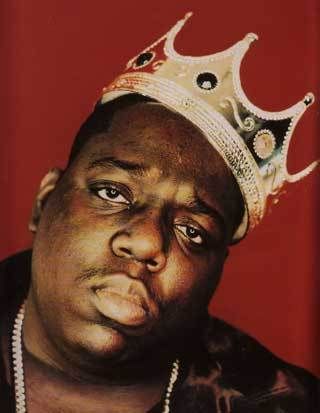
If Heaven’s Got A Ghetto, Tell B.I.G. Things Done Changed: The Legacy of The Notorious B.I.G. and Today’s Urban America

By Michael Partis


“Excuse me, flows just grow through me/like trees to branches, cliffs to avalanches/ It’s the praying mantis/ Deep like the mind of Farrakhan/ a motherfucking rap phenomenon.”

The Notorious B.I.G.- “The What”

Thursday, February 28, 2008

Take Me As I Am

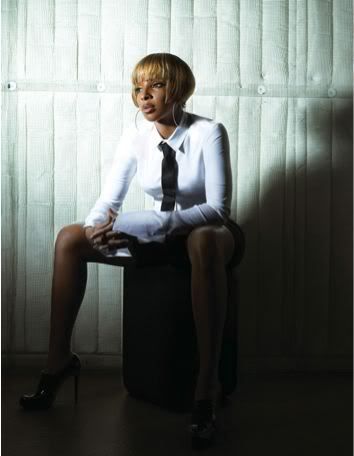
Take Me As I Am: Mary, MJB, or Nigga?

BY Michael Partis


Mary on her relationship with Oprah

“’Oprah was like, ‘I didn’t care for you, but it was when I got to know you that I realized who you were.’ Though Oprah is now a friend, Mary is not surprised at her opinion. ‘I understand somebody like her wouldn’t even feel me at all.’ Mary says. ‘I’m a nigga, you know what I’m sayin? So when she said that to me, I was like, ‘Thank you for that honesty.’”

Mary J. Blige
No Shame
VIBE February 2008


Mary J. Blige has always been known for her sincerity. Through her lyrics, words, and voice, she has made songs, interviews, and powerful vocal performances convey the Mary J. Blige Experience; an experience that has taken listeners and observers through a odyssey of pain, joy, tears, Real Love, life, No More Drama, Yonkers, hip-hop soul, ghetto fabulous, happiness, and everything else that makes her Mary. It is a life no one could fake, and has a part everyone within the Hip-Hop nation could relate to. That is why for over the past fifteen years, Mary has and continues to serve as a symbol of the Black female experience.

Mary’s symbol status is indicative of the consciousness of our post-Civil Rights and post-crack era generation. The socio-economical problems of our inner-cities were communicated through the medium of Hip-Hop music. It was a medium that elders, like C. Dolores Tucker and Calvin Butts, did not understand. The elders and the critics knew that the destructive violence expressed in Black-on-Black crime, or derogatory treatment of women and blatant sexism was wrong. But they didn’t understand why there were “Niggas With Attitudes;” or why they lived a “T.H.U.G. L.I.F.E;” or why “cash ruled everything around me.” They did not know why it was on the young people’s minds, and they did not know why they had to communicate it with rage, anger, pain, and vulgarity.

So it only makes sense that the greatest symbol of Black upward mobility and financial success over the past twenty-five didn’t understand Mary J. Blige. It’s only logical that even though they shared the same condition of being a successful Black woman in American society, Oprah Winfrey just didn’t “care” for MJB.

But what do a whole generation of young people of color who were not recognized by their elders, not respected by their elders, and not “cared” for by their elders see themselves as???”

They see themselves as “niggas”. And it is within this context that the word “nigga” has developed over the past twenty-five years.

A generation of young people (with African Diasporic lineage) that were marginalized and neglected developed their own voices and conveyed their own lived experience through Hip-Hop music and culture. They constructed their identity and developed an understanding of themselves and others through a self-appropriation of the word “nigger.” This successful (or attempted, depending on your opinion) self-appropriation of the word makes “nigger” transform into the vernacular “nigga.” You can only become the reflexive, communally-accepted “my nigga” if you show some understanding, comprehension, or connection with the post-Civil Rights Movement, post-Crack Era inner-city lived experience of those from the African Disaporic community. If you can’t connect, then you become the general, impersonal “that nigga” or “them niggas.”

Are there more usages than what I just gave above: absolutely. Is there tremendously more complexity in how the word is used than I explained above: absolutely. But do a large number of youth within the Hip-Hop culture use “nigga” within the context I stated above as a reference to their identity: absolutely.

This is why Mary J. Blige can understand why Oprah did not like at first; there is a whole generation of people who are Oprah’s contemporaries and in her cohort who don’t “care” for “niggas” either.

So if one of the most famous and successful Black artists of the past fifteen years sees herself as a “nigga,” there’s a whole generation seeing themselves the same way.

What are the consequences of this? And what are the consequences for what is becoming now a second generation of young people who construct their identity as “niggas?”

In his 1998 book “Yo’ Mama’s DisFUNKtional!: Fighting the Cultural Wars in Urban America” Robin D.G. Kelley takes social scientists and other academics and researchers to task for their singular, archetypal, stereotypical approach to looking at African Americans in urban environment in a chapter he called “Looking for the ‘real’ Nigga.” Hopefully the generation of C. Dolores Tucker’s, Calvin Butts’, and Oprah Winfrey’s who didn’t “care” much about young “niggas” before can rid themselves of the thinking Kelley talks about. And then they and the generation of Mary J. Blige (who grew up thinking of themselves as “niggas”), can come together to see how the poverty, sexism, racism, prison industrial complex, police brutality, and inequality in the American justice system that still plagues people of color in today society is making new “niggas” everyday.

Maybe then people would finally see that Hip-Hop didn’t create these problems. And Hip-Hop is certainly not creating these “niggas.”


Michael Partis
michaelpartis@gmail.com
myspace.com/hiphopthought
http://michaelpartis.blogspot.com/
http://my.rawkus.com/profile/ForeThought


Wednesday, February 6, 2008

When The Empire Strikes Back, We Say YES WE CAN: The Boondocks, Hip-Hop, & Politics As Usual

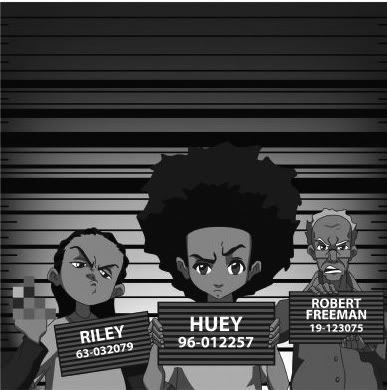
"Excuse me. I have brief announcement. Jesus was black, Ronald Regan was the devil and the government is lying about 9/11. Thank you for you time and good night." Huey Freeman- "The Boondocks"

“Don’t make sense for Obama to win/if Hilary still getting votes from ya mama and them”
Jadakiss-“Mornings was Hashbrowns” Freestyle

“I’m not sure America is ready for a Black President.” 50 Cent to Bill O’Reily- February 2008


The Boondocks is one of the last television shows in mainstream media that provides a honest, truthful critique of contemporary Black life. As African-Americans are no longer the largest “minority” population, and America continues to promote a “color-blind,” “racism is of the past” rhetoric, often we fail or are afraid to speak truthfully and candidly about race relations in society today. Comedy, parody, and satire have always been an outlet for political and societal critique. Richard Pryor did it; Dick Gregory did it; Dennis Miller did it; Dave Chappelle did it; Bill Maher does it. In their own way, each have pushed taboo or ignored topics into our daily conversation and consciousness.

Aaron McGruder has used The Boondocks cartoon strip and television series & to push us further then we have been pushed in quite sometime. He’s forced us to seriously think about how it would be if Dr. King were alive today; he’s forced us to remember the people from the Gulf Coast affected by Hurricane Katrina (just in case we forgot about the people in the Superdome); he forces us to rethink who are our “black leaders;” he forces us to rethink hip-hop’s place in our lives; he forces us to rethink ourselves.

But when he forces us to rethink what is BET about… that’s when the trouble starts. It is indicative of the classic struggle: how do we challenge the people in control? And how do we challenge ourselves to be more just, more objective, more thoughtful? The spirit of expression, resistance, and confrontation that is indicative of The Boondocks, is the same spirit we find in the essence of Hip-Hop. The question is does Hip-Hop have the courage to ignore the profits, riches, and fame, to challenge society to be better, and to change?

So when one presidential candidate runs on a slogan that reads “stand for change,” and he has convinced people to buy into, it speaks volumes. As presidential hopeful Barack Obama drives through America’s political landscape on the vehicle of hope, change, and a future which involves all Americans, it seems the Hip-Hop community has taken notice. He’s made Jadakiss mention him in a freestyle, Kidz in the Hall make a Obama campaign song, will.i.am put together a pro-Barack music video, and brought Tatiana Ali back to our conscious (wasn’t she the last person you expected to see in that music video).

Hip-Hop stars say vote for Barack and P.Diddy gets on his knees to beg us to vote: SO WHAT? Is putting the 2008 Election and politics into the young hip-hop generation’s frame of reference important? YES. But it takes more than yelling “Go vote!!!!!” or telling people who to vote for. We need people to be informed about how delegates work in primaries, why the dollars is losing value everyday, why fixing the Social Security system is important (haven’t heard about that one in a while right?), and what are we going to do to integrate the brothers and sisters who were jailed in droves during the late 1980’s and early 1990’s and are now coming home (look around at hoods all over America, they’re home) into today’s society and economy.

(If you have not noticed by now, or have refused to notice up to this point) Hip-Hop music and culture is the point of entry for those trying to reach, cultivate, and work together with the young people of this country (and for that matter, around the world). But all the voices in the movement must be heard: the “backpackers”, the “gangsters”, the “skateboarders”, the “old-heads”, the “hip-hop historians and scholars.” All have a part in the narrative. All must push each other address to be open, honest, and candid.

When Bill O’Reilly can sit in 50 Cent’s car, interview him, then come on the air and call him a “pinhead,” we know there’s a problem. When there are people in Haiti forced to eat mud pies for subsistence, we know there’s a problem. When there are people who won’t vote for a Black man to become president because they are afraid he would be assassinated (contrary to your first reaction, 50 Cent is NOT the only person who thinks this… talk to any American 50 years old or older who can remember JFK, RFK, or MLK). And when we can not challenge the number one mainstream hip-hop and Black entertainment outlet on television, we know there is a problem. We must use our minds, our hearts, and our voices to strike back.

Michael Partis

michaelpartis@gmail.com

myspace.com/hiphopthought

http://michaelpartis.blogspot.com/


The Problems:

Poor Haitians Resort to Eating Dirt (I wasn't playing...)

http://abcnews.go.com/Health/wireStory?id=4212012

Barack's Speech the night of the New Hampshire Primary (you saw the music video, listen to the speech)

http://www.youtube.com/watch?v=Fe751kMBwms

The Root

About Us
The Root is a daily online magazine that provides thought-provoking commentary on today's news from a variety of black perspectives. The site also hosts an interactive genealogical section to trace one's ancestry through AfricanDNA.com, a DNA testing site co-founded by Henry Louis Gates, Jr., who is also The Root's Editor-In-Chief. The Root aims to be an unprecedented departure from traditional American journalism, raising the profile of black voices in mainstream media and engaging anyone interested in black culture around the world.

http://link.brightcove.com/services/link/bcpid1381640169/bclid1385253087/bctid1386343372

"Girl Like Me"

Color is more than skin deep for young African-American women struggling to define themselves.

http://www.youtube.com/watch?v=YWyI77Yh1Gg

Friday, February 1, 2008

Fordham University's College Shadowing Program

Private universities, with a majority White student body, don't often visit communities of lower-income students of color---period.

Fordham University's College Shadowing Program allowed high school students to visit the university, and be assigned to a Fordham student. Thus the high school students follows the college student for a week and gets personal insight on college life.

Check out this article on it. Peace

http://www.fordham.edu/campus_resources/public_affairs/inside_fordham/december_17_2007/news/_bronx_high_school_s_28742.asp

Saturday, January 5, 2008

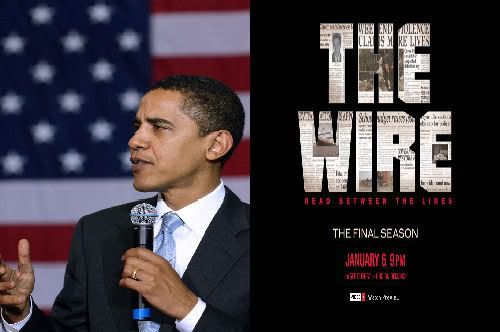
At The River I Stand, Watching The Wire: Black America in 2008 & Beyond

CHECK OUT MY LATEST EDITORIAL

At The River I Stand, Watching The Wire: Black America in 2008 & Beyond


cover


Michael Partis
michaelpartis@gmail.com
www.myspace.com/hiphopthought
http://my.rawkus.com/profile/ForeThought
http://michaelpartis.blogspot.com/

Now You Got The Juice: The People Power of The Hip-Hop Head

Here's an editorial I wrote on the Real Talk NY Website. Read & Comment Please. Peace

Now You Got The Juice: The People Power of The Hip-Hop Head


Opening Statement- Who Am I?


MY OPENING STATEMENT


SHARE MY WORLD

I have created this blog as a place where people can read more about my work and find out more about me. I will post my articles, editorials, commentaries, essays, and other writings here. This will be a way to archive my work, a way for others to reference my writing, and my way to share a part of myself with the world. Read, criticize, argue, debate freely; BUT do so in the spirit of love, in a commitment to better this world, and to bridge the racial, social, and economic problems of this world. WORDLIFE

______________________________________________________________________

INSIDE MY HEART

"When Brown babies emerge from the womb they passionately seek the essence of humanity. See they long for an understanding of this human condition. They babble till they talk; crawl till they walk; teethe till they eat; and alternate between long hours of wake, & long hours of sleep. All in an attempt to find what really is life's deeper meaning. Some look inside, some look outside. Some look back, some look forward. When I saw slavery, racism, Jim Crow, colonialism, segregation, and discrimination- I decided to dedicate my life to liberation. Because this brown baby decided the essence of his people is '....too be free...'" M.P

______________________________________________________________________

INSIDE MY MIND

Theory precedes action. We develop a way of thinking. This way of thinking affects the way we understand. And our environment affects what it is we have to understand. Once we think, once we understand, then we act. You can react without thinking. Even for the slightest of seconds, you process-then you react.

Throughout history, those people of African descent who have been identified as "Black," have had a truly distinct existance in the world. They have lived through over 400 yrs of history in which "Black" has casted as inferior, savage, barbaric, pathologically flawed culturally, and biologically short-changed genetically; they've been villianized, criminalized, and economically dis-advantaged. These are only SOME of the constructions that have hindered Blacks.

This has created a shared experience amongst many in the group. While everybody has individual experiences, those characterized as Blacks have experienced (at some point) the effects of their being marked.

Thus a large group of Blacks have been systematically put in among the lowest of socio-economic positions. We function in a system that perpetuates them being politically pandered to, economically limited, and socially stereotyped, marginalized, and isolated. Many did not reap the fruits of the fame Civil Rights Movement.

The group left behind have been given the named the "underclass." They many times live in the "ghetto."

But see agency was never lost in these people. They never lost the ability to do for themselves. They never lost the belief in helping themselves. And a popular way they displayed this belief in changing their existence, in understanding their existence, and in challenging the system... is through expression. Whether it be physical prowess in sports, expression through the "letters" (writing, scholarship, poetry, painting, fiction, etc), or political consciousness in community organizing & activism- liberation was a tangible goal; and Blacks took vested interested in improving their lives.

One form of expression and one genre of music has forcefully turned into a culture that lives, narrates,and captures this experience: Hip-Hop. Hip-Hop Culture has become a common tread amongst a generation of Blacks. It invokes their voice, their history, their lives, and their place. Thus it has grown to encompass their environment; it affects how they understand the world around them; and has steeped into their consciousness a certain way of thinking. They have "Hip-Hop Thought."

"Hip-Hop Thought" is what has affected my entire life. It has brought me to this point I am at now; for better or for worst, till death do us part. And it has affected my entire generation, and it is affecting the generation after me. As such it serves as the baseline of my understanding, and my life.

This is where I'm from...