Wednesday, July 1, 2009

From a Project Point of View


The South Bronx, and Public Housing.

The nomination of Judge Sonia Sotomayor has brought both places to the public’s frame of reference over the past few weeks. That reference is also drenched in a confluence of negative stigmas, connotations, and stereotypes. This has allowed the South Bronx and the projects to proliferate in marginalization and isolation. Poverty and social neglect are realities that this American society refuses to acknowledge. Accountability for the condition of these places turns into a discourse on personal responsibility.

But the potential of a Supreme Court Justice rising from these circumstances both complicates and fits this narrative. It complicates how we think of public housing and its residents – it is not a Black Hole for potential, but rather it can cultivate the best and the brightest…just like the rest of the United States. And in this way it still fits the story we love to hear: an “American Dream” where anybody can make it; the cream rises to the top; and if she did it, then you can do it. While the New York Times chose to affirm this trope (see the May 29th article “Up and Out of NY’s Projects), the Washington Post opted to posit Sotomayor’s Bronxdale Housing Projects in a more sobering light. Rather than it being a beacon of opportunity, they confront the stark trouble and problems which Bronxdale’s residents endure today—some of recent, many for over a generation. As Biggie once poignantly told us, “Things done changed…”

As a former resident of Bronx public housing, a life-long resident of the South Bronx, and a researcher on contemporary life in Bronx public housing, this has been a conversation that has profoundly affected me; professionally and personally.
In response to the evolving and intensifying discussion of these issues in many circles, I wrote the following letter as a reflection of my time and my experiences, and as a testament to the shared experience and group ethos me and many of my peers were a part of.

In that spirit I hope this letter is a catalyst for the public and for concerned citizens and residents to think deeply about poverty, isolation, and treatment in our society. And that is pushes us to social and political action that improves access, opportunity, and justice in every economic, material, and theoretical facet of our country.

In Struggle,
Michael Partis

-------------------------------------

“Looking historically at Bronx public housing is quite jarring for someone who grew up there during the 90's. For seven years, I lived in the Castle Hill Projects. Moreover, a large amount of my friends are part of my peer group and came of age in NYC public housing: many in the Bronx (Mitchell, St. Mary's, Paterson, Edenwald, Soundview, Webster, Forest), and many in Harlem too (Polo Grounds, Wagner, Washington, Johnson, Taft).

We spent summers together in parks; winters in building hallways & stairwells. We tried to scam food stamps for real cash (before they turned them into EBT cards); played in basketball tournaments, drank Tropical Fantasy soda, and got into trouble. It wasn't deviant behavior or a culture of poverty. For us, it was life.

But for those like me who came up in the PJ's after the "Crack Era," the hood was the valley, the shadow, the death, and the Promised Land. No, it wasn't New Jack City. But drug dealing was unequivocally, unquestionably, the number one employer in the neighborhood. It certainly was partly ethos—in so many ways me, the friends I grew up with, and the people we all ran with, WANTED to hustle. Sure it was an easy economic opportunity. Nobody was paying to you work in their supermarket or bodega (immigrant adults did those jobs); nobody gave you a few dollars to sweep up hair at the barber shop; and "working class" families were few and far between. We weren't even in the working-class boat. Many of us lived on welfare; ate off Food Stamps; and grew up on WIC (all of this was before they started "Work-fare"). No doubt, some folks had disposable income from decent city or state jobs. But the rest of us were poor; like in poverty; like keeping the oven on to stay warm during the winter; making hot dogs and Chief Boyardee for dinner; and eating those terrible name brand knock-off WIC cereals for breakfast.

But a lot of us hustled because, it looked fly. It was cultural—not just an aesthetic, but also social capital. It built your street cred; built your name. It opened up business opportunities: you could expand your hustle to other buildings, down the street, and (if you were ready for war) other neighborhoods. And the younger you started, the better you could get. The hungrier you are; the greater your hustler's ambition; and the sooner you started stacking, you could make money and "get out."

Some people call it crime. We called it a dream. For us, it was our promise land.

Of course not everyone looked to this way out. But I'll refrain from going into the success stories of those who don't go this route. Sure you can overcome the poverty, and inequality, and become a Supreme Court nominee or a college graduate. But it doesn't mean the game should be set up that way...or that everyone can win.

This isn't a Donald Goines book, or a Terri Woods publication. It's not a screenplay written by the Hughes Brothers, or on set on some project bench. It's a story lived by many, embodied in many, and familiar to too many.

Scary thing is that this is the experiential for not just project kids, this is the experience for many U.S. kids who grow up Black and in poverty. And it's not just a 90's thing or a 2000's thing. You still see it in the Bronx to this day. You go walk through Edenwald today; visit Watson Ave or Colgate Ave; check out Soundview; travel around Mount Eden tonight. Guns, drugs, and the lifestyle it inflicts on its participants and viewers is a frightening site.

Of course there is plenty of blame to go around (isn’t there always?). And everybody should hold some accountability. But someone has to take accountability for structural inequality; and the inequality in access, resources, and opportunity.

Who makes public policy with inefficient "solutions" to address long-existing social problems? I don't think anyone in 2175 Lacombe Avenue did; and I know no one in apartment 8I did for damn sure. And...maybe that's the problem right there.

But indeed this poignant viewpoint and insight is what led me to do a case-study of youth in Bronx public housing for my undergraduate Senior Thesis at Fordham University. It’s why I am continuing this research as an ethnography and dissertation in Graduate school. And why public housing, inequality, poverty, policy, and socio-economic structures are my research interest. Because maybe, if we can allow those experiencing this lived reality to bring their own stories to the center of our public conversations...then maybe America can see how ugly the persistence of racism and discrimination is. Or realize the ramifications of local level officials’ impotence, neglect, and unabashed self-interest (see the absolute MESS occurring in the New York State legislature currently). Or truly recognize the ineffectiveness market-based economic solutions have; and just how sinful and self-indulgent economic empowerment zones, corporate giving, and the entire reform platform have been.

So there goes a personal narrative on life in public housing by someone who lived it. From a Black man who was influenced by sports, drugs, and violence, but now is a Ph.D. student. And who hopes to allow others from related backgrounds, with similar stories, and a shared lived experience to speak about their lives in the Bronx projects for themselves.

Michael Partis
Castle Hill Projects 1992-1999.
The Hood 1986-Present.
Fordham University-Rose Hill B.A. 2008
CUNY Graduate Center Ph.D 2014”
------------


If anybody would like to read my Senior Thesis on young people in the South Bronx's Mitchel Projects, or interested in and/or does research on public housing in the United States, please feel free to contact with me at michaelpartis@gmail.com.

Peace

Tuesday, March 24, 2009

A King and The Illest: Remembering Dr. King and The Notorious B.I.G.

Dr. Martin Luther King - I Have A Dream Speech

Dr. Martin Luther King, Jr. and The Notorious B.I.G. are two of the biggest cultural figures in American history. Dr. King is renowned for his political, theological, and civic work. Biggie Smalls is celebrated for his exceptional musical ability as a rapper. And both men were vital in two of the 20th century’s greatest social, political, and cultural phenomenons: the Civil Rights Movement, and Hip-Hop.

Yet, we do not think of these men simultaneously. In fact, many might say it is blasphemous to even mention them in the same breath. But as we commemorate Dr. King’s birthday and holiday, and anticipate the release of Notorious (the first major studio film about the life of Biggie), we are afforded a unique opportunity: the chance to bridge generations by carefully looking at two icons. Looking at each man's life allows us to revisit our relationship to them; and to critically think about their virtues and their flaws. Most important though is this question: can we find mutuality and commonality with B.I.G. and King?

Without doubt, the differences between King and Biggie are stark and vast. (Continue below)


Tuesday, January 27, 2009

New York Hip-Hop STAND UP!


Audio of me with Miz D on Juice Radio talking about the State of Hip-Hop. Can New York still represent in the Rap game? Can Hip-Hop still remain viable as an artform? What's the good, the bad, and the ugly?

Check it out:

Juice Radio feating Miz D-Can NY Hip-Hop make a Comeback?
http://www.blogtalkradio.com/JuiceRadio/2009/01/25/TBA

And here's a clip of the interview posted on You Tube:
http://www.youtube.com/watch?v=LyD_9FY1yOo

Shouts out to Miz D and the Juice Radio Crew

And P.S. NY Rap still GETTIN IT! And the Bronx STILL makin it. Check out these MC's

Ray $ da Schola
http://myspace.com/dolladascholar
http://raydolladascholar.blogspot.com/
http://imeem.com/raydolla

S.T. & BeyAy Entertainment
www.myspace.com/beyayentertainment
http://www.youtube.com/user/BeyayTV

G.O.
www.myspace.com/goewp

Patty Dukes
http://www.pattydukes.com

Monday, January 19, 2009

Celebrating Life After Death-Biggie Smalls' Lesson on Joy and Pain


ORIGINALLY POSTED ON THE LIBERATOR MAGAZINE WEBSITE
http://weblog.liberatormagazine.com/2009/01/celebrating-life-after-death.html

For the past few days I have seen a lot of negativity about Notorious, the new movie about the life of rapper Notorious B.I.G. Most of the criticism seems to stem from anger over the film's "glorification" of the street hustler ambition Biggie personifies. Others complain that the film fails to deliver the gravitas of Wallace's life; instead of a complicated, probing, thorough compilation, we get a glossy, "made-for-industry" story which archetypes the stereotypical "Black male" narrative.

You know like "Kick a few bars, so I can buy a few cars"

Or "I stay Coogi down to the socks/rings and watch filled with rocks."

I know ugly hurts the eyes, and ignorance hurts the soul. And without question, Hip-Hop can occasionally hurt us in excruciating ways.

But maybe, it is time we remember that life is "Joy and Pain." And sometimes, it doesn't hurt to embrace the joy...

A classic episode of the 1970's Black sitcom "Good Times" gives us an important lesson in Joy and Pain.

When James Evans (actor James Amos' role as patriarch of a poor Black Chicago family) dies, Michael, J.J. and Thelma wonder why their mother Florida (played by the venerable Esther Rolle) is not "grieving" over their father's death. In a brilliantly resonating, exceptionally poignant moment (the type of moment all to sorely missing from the series' latter days,) Rolle explains how we shouldn't think of death strictly as grim, devastating, and sad. Rather, Florida explains to her children that death can be seen as a time not to lament or bemoan...but as a time to celebrate--to celebrate one's life and to cherish what a person gave us. We give praise to life by remembering it. Death is the fulfillment of our journey. And we should celebrate it.

The greatness of the Evans family's TV moment is that Florida tells us that this is a tradition of the African culture. Celebrating death as the fulfillment of life is an African Diasporic tradition.

I think we need to recapture that sentiment, and remember it as we reflect on Biggie's life and watch his new movie.

All too often our community fails to maintain the fine balance that is critique and analysis; positive and negative; rhyme and reason. Either we find ourselves in uncritical, fallacious bliss; blind, unconditional denial; dogged, burdening negativity; or apathetic, resolved resign. Emotions are certainly a juggling act, and not a easy feat by no means. But we should always remind ourselves of time and place.

Undoubtedly, the life of the Notorious B.I.G. is troubled. His womanizing actions; his illegal activities; his role in capitalism's hi-jacking of Hip-Hop culture; his indulgent expressions of violence and vulgarity; this is no question disturbing and problematic. We need to look at these problems closely to grow and improve; and to gain a fuller understanding of how these issues come about, and what to do about their presence. Yes, looking at Biggie's life gives us a opportunity for all of this.

But it also gives us the opportunity to...celebrate.

Christopher Wallace was one of the most talented musicians of the 20th century. His extraordinary verbal fluidity, his lyrical prowess in rhyme, and his remarkable ability to convey imagery, metaphor, imagination, and experience into narrative form--these skills make him not only one of America's greatest story-tellers, but one of the African Diasporic communities most gifted individuals.

And there is nothing wrong with accepting that.

"Hypnotize," "Mo Money, Mo Problems," and "One More Chance," is music that can make you dance. Songs like "Juicy," or "Missing U," can make you introspective. And joints like "Kick in the Door," or "Get Money" can get you hyped.

Is there anything wrong with that?

The burden of being politically orientated, progressively leaning, and socially conscious can be exhaustive. It can definitely keep you working all day, and up all night (or more likely, working day and night). But sometimes we need to be reminded that life is more than that. Joy exists in struggle. Birth is precious; victory can be attained; happiness has a place...if we make room for it.

For a moment, for a time, we should allow ourselves to feel good.

Beyond Biggie though, we need to embrace the moments of joy we capture in this world. Hip-Hop may have many problems, but if it teaches us one thing...it is to celebrate.

As we embark on a several day journey where we will honor Dr. King, remember Biggie, and inaugurate the first Black president, let us seize the moment. We can worry about what is lacking, or what can go wrong, or what is already a problem, afterwards.

For a moment, let us not be afraid to... be happy.

We need to create spaces where we can reflect on our short-comings and problems. We need time to critique ourselves and each others in an attempt to be better.

But let us never forget to celebrate life... even after death.

P.S. We'll Always Love Big Poppa....


Michael Partis
michaelpartis@gmail.com
www.michaelpartis.blogspot.com
www.myspace.com/hiphopthought

Wednesday, January 14, 2009

The Answer's Last Question-Can He Become a Legend?


Originally Posted at The TSA Report.com
http://www.tsareport.com/#3

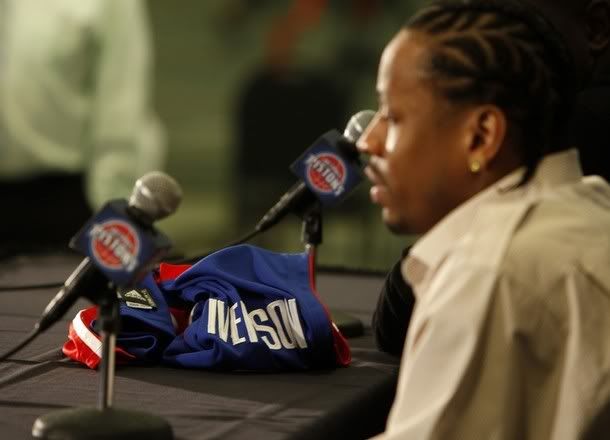
Allen Iverson is a generational icon. Iverson embodies the Black athlete who was birthed from the Hip-Hop culture. He personifies the Hip-Hop aesthetic: brash, relentless, and fearless. His free-wheeling, improvisational, lightening-fast game introduced the next phase of basketball - a phase that actualized a playground sensibility, and embraced the oppositional, self-defining world-view of the new athlete. The cornrows, the cross-over dribbles, the multiple tattoos, taking on Michael Jordan at the top of the key; these were the features and qualities that endeared Iverson to basketball fans throughout America’s urban landscape, and made him intriguing to the post Bird-Magic-Jordan NBA community. Iverson was NBA basketball…the remix.

But that was the 90’s.

As we close the first decade of the 21st century, Allen Iverson’s thirteen year NBA career and cultural status stand at a crossroads. No longer is A.I. the youthful “rebel without a cause” adored by all. In many ways his cultural resonance has been surpassed by the Lebrons, Carmelos, and Dwyanes of the perpetual “next generation.” The “ghetto fabulous” appearance and “take-no-prisoners” disposition that defined a cohort of players like Chris Webber, Latrell Sprewell, and Iverson, has given way to an economically driven sense of market-awareness and commercial appeal evident by the league’s new superstars. Symbolically, Chris Weber’s “Fab Five” has become D-Wade’s “Fave 5.” A.I.’s Reebok has become Lebron’s Nike.

The story that remains though is Iverson’s career on the court. Statistics certify his status as one of the greatest scorers in NBA history. The memories of fans and the highlight reels will certainly affirm him as pound-for-pound one of toughest players ever to step on the hardwood. But his one-man show in Philadelphia, and two-star attraction in Denver, did not achieve the accomplishment that distinguishes an NBA career: a championship ring. In fact, they barely produced playoff victories - note Denver’s 1-8 playoff record during the Iverson years.

And so, the legacy of Allen Iverson rests not on his cultural relevance, but on his basketball career. As he now stands in Detroit, he has become part of a Pistons group also trying to define itself in basketball history. Their one NBA championship is blemished with six consecutive trips to the Eastern Conference Finals without advancing to the NBA Finals. As this Pistons team searches to solidify their place among the greatest, so does Iverson. Can A.I. transcend them, and his career, to all-time stature?

“The Answer” remains to be seen.

Saturday, December 20, 2008

Mr. Can't Tell Me Nothing: The Genius, Audacity, and Struggle of Kanye West


"You know how the game be/ I can't let em change me/ Cause on Judgment Day, you gon blame me/ Look God, it's the same me"

Kanye West-"Two Words"

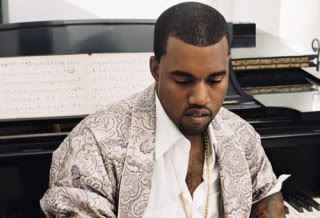
Kanye is dropping what might be his most provocative musical work, in what might be one of his darkest personal periods. All while society is in one of the most politically, economically, and socially-charged times in recent history.

Is 808s and Heartbreak Kanye's official "Declaration of Independence?" Or is it a living testimony of his personal anguish?

Is this new found sound still Hip-Hop? And can the Hip-Hop community handle this "New Wave Hip-Hop?"

Thursday, October 23, 2008

Can All the M&M's Remain Together?


Can All the M&M's Remain Together: Thinking About Obama's Multi-racial Coalition in Victory and in Defeat

On The Root.com yesterday, Wendi C. Thomas (metro columnist for Memphis, TN's The Commercial Appeal) wrote an article titled "Will White People Riot?"

Thomas hashed through the perpetual idea that Blacks act and behavior en mass, in response to a White man from Memphis asking her: "Would Black people riot if Sen. Barack Obama didn't win the election?"

Her article brought forth a thought-provoking analysis which posits that a more likely population to worry about rioting would be the loathing, race-baiting crowd seen at McCain GOP rallies (you know the one's that shout "TERRORIST!!!" and "KILL HIM!!!" at the mention of Obama's name).

For Thomas the question is not whether Black people can handle an Obama defeat, but can racist Whites handle an Obama victory.

When thinking about Obama, I always think about how he has this "multi-racial" thing going for him. We see it among supporters; we see it among campaign volunteers; we even saw it in Iowa.

We've seen it in good times, we have seen it in bad times, but will we see if it gets UGLY (or rather, uglier than it has already been)? Meaning IF (and I emphasize that it is an IF we really, really don't need), IF Obama loses the election on Nov. 4---what will happen then? What would a defeat do to the multi-racial Obama machine?

I know, I know. At this point we need to be putting all our positive energy and thoughts into an Obama victory. But we have to keep in the back of our mind the dark side too.

Would they rally together? Or splinter apart?

Historically in America, we have seen Blacks in rebellion (Watts '65, Detroit '68, Harlem '64, etc); we have seen Whites come together in resistance (the early 20th century race riots in places like Tulsa or East St. Louis; in racist and discriminatory legislation; hell in the formation of the Ku Klux Klan).

But we have also seen many coalitions of multi-racial, multi-issue, multi-community support. It is a progressive model that has been set forth throughout history: the abolitionist movement; radical organizers in the Communist party and others in the early 20th century U.S.; in CORE and other groups involved in the Civil Rights Movement. And such this has been the model called for, advocated for, and exercised by many organizers and activists.

But much in the way all these movements came to a head over divisive issues and events---particularly in the late 1960's---we are coming to a similar junction in these times.

This head has two parts though: first, what will happen in the event of an Obama defeat? Could all the M&M's mobilize together still? And if defeat did lead to rebellion and resistance, could all the M&M's rebel together?

But the second point is a bit more intriguing: what happens if Obama wins?

In so many ways, a Black man becoming President of the United States of America would be the fulfillment of the greater possibility so many Americans have worked, sweat, bled, and even died for. That we could surpass historic and living attitudes of racist, discrimination, and hate; and overcome injustice and inequality.

As Barack put it in early March: "that this nation is more than the sum of its parts-that out of our many, we are truly one."


But what happens next? How does the multi-racial, multi-issue, multi-community Obama movement deal with victory?

It is so crucial for all the interest-groups and all the supporters to continue to move united, progressively, and with forward-vision.

Ironically enough, victory would be the opportune time for division. And so, the bag of M&M's must begin planning for its united future.

Michael Partis
michaelpartis@gmail.com
michaelpartis.blogspot.com
myspace.com/hiphopthought

Tuesday, October 21, 2008

Either Your Slinging Crack Rock or You Got a Wicked Jumpshot: Sports, Politics, and Economic Opportunity in the 21st Century's Racial Reality

Jumpshot

Forty years ago this month, the 1968 Olympic Games was defined by the political statement of two Black athletes. With Black fist raised high, and an ode to the Black Power movement displayed, Tommie Smith and John Carlos made one of the most profound political statements ever seen at an international sporting event.

The beauty and the significance of the statement was the weight and poignancy of its symbolism. Smith wore a black scarf around his neck to symbolize Black pride, and Carlos wore beads around his in recognition of the Blacks who lost their life on the Middle Passage. Both wore black socks but no shoes, to symbolize the pervasive poverty numerous Blacks faced. Each had on a black glove on the raised fists, emboldening the Black Power cry.

Smith and Carlos' act was not a "rebel without a cause" moment, but an attempt to raise awareness about the condition of those who materially have the least and work mightily to obtain more. They represented not just the Texas and Harlem neighborhoods their came from, but struggle of those in the African Diaspora. Class, race, and human rights all came together in sports.

Jumpshot

Would Terrell Owens put up a fist for "Black Power" after he scores his next touchdown? Would Lebron James lead a voter registration drive in his home-state of Ohio? Is Floyd Mayweather going to comment on the need to restructure America's health care system?

When the Celtics visited the White House for their NBA Championship visit, did Ray Allen and Kevin Garnett talk to President Bush about his tax plan? Will Candice Parker and Lisa Leslie come out and endorse Cynthia Mckinney and Rosa Clemente for President?

And if they did, would Nike, Reebok, Adidas, and all their other sponsors take away their endorsement deals?

When Jim Brown criticized Michael Jordan, Kobe Bryant, and today's Black athletes a few days ago, he touched on an important issue---the role of the Black athlete in contemporary society, and their responsibility to themselves and the Black community.

Certainly it isn't a new discussion. But given the times, it seems all the more pertinent to think about.

The Black athlete in today's society is perhaps the most notable figure in the Black community. They are certainly among the wealthiest; and among young Blacks, perhaps the most influential. While it may not be a position they asked for, it is one they occupy none the less---no matter who thinks they shouldn't be, and no matter how much the athletes may say they don't want to be.

The question becomes what does their social position and privilege mean in today's society. Should we expect them to be more than athletes? Do they have a greater responsibility?

For the Black community, sports have always been about more than achievement. In fact one of sports main functions in Black life during the first half of the 20th century was disproving the idea of Blacks being biologically inferior. Contest on the field, in the ring, and on the court were challenges to White supremacy (biologically and ideologically). This is why the fights of Jack Johnson and Joe Louis, the races of Jesse Owens, and the success of Jackie Roberson are monumental events in American history. It is where not only did we see sports, but racial struggle played out.

For the Black community, sports was political. The 68' Olympics Black Power moment defines this.

But it was also economical.

Sports opened financial and entrepreneurial opportunities for Blacks. Successful athletes were able to open businesses in Black communities, and some members in those communities sought to use sports to create business enterprises (i.e. the Negro Leagues).

Many athletes felt a duty came with this success: a commitment to advocate for Black rights, a responsibility to stand against injustice and the violation of human rights, a mandate to use financial success and social recognition as a tool for community building.

You didn't just play a sport. You were compelled to have a moral stance, a social consciousness, and a political awareness. The lives and work of Black leaders like Paul Robeson, Jim Brown, Bill Russell, and Muhammad Ali are a testament to this.

Russell, Brown,Ali, Jabbar

Sports, race, politics, economics, morality, community---they were not separate, it all went together.

There is no question Black athletes like Serena Williams, Lebron James, or Carmelo Anthony know about the struggle of many Blacks in urban cities today. Being raised and growing up in areas like Compton, CA, Akron, OH, and Baltimore, MD make that reality unmistakable. Living in cities marked by racial segregation; plagued by the economic troubles of unemployment, gentrification, and de-industrialization; and haunted by racial inequalities embed this reality in them. They and many other Black athletes have lived the other side of the Civil Rights Movement's success: the continuance of racial segregation, unequal access to resources, and inequality in living conditions. The issues that Smith and Carlos attempted to raise are still issue today.

Many of these athletes have a Black consciousness, constructed by living through the success, hardship, pride, and complexity of race in America. And many of them understand the economic situation of those who have the least.

It is being young, Black, and successful in America, and the burden and challenges it brings that they struggle with. It is not financial obligation or charity that is difficult for them, it is the accountability of political advocacy and the fight for justice that is the burden.

"Do You," "Give Back," "Stand Up," or "Say Something," these are the choices and pressures our Black athletes face today. A pressure added to the fact that many have to grow up and mature in front of the whole world; making their missteps, mistakes, and learning experiences subject to the scrutiny of the public.

This all combines to create a tremendous tension over what is their role---to be role models for the Black community; to dedicate themselves to giving back to those who have less; and to use their global name recognition, ample resources, and media access to advocate for social justice and human rights issues; in short, to become more than sports heroes---to become role models, and community-orientated, politically involved leaders.

Lebron and Kobe

There's no doubt your parents, your teacher, or someone in the community should be young people's role models; these are the people they should look up to.

The problem is how many young Black kids grow up without parents, without teachers who care, and with adults who certainly are not role models.

The fact that so many Blacks have chosen to use sports as a healthy, legal way to provide for themselves and their families should be commended. But doesn't it show that their lives and their stories, the perseverance, dedication, and determination used to reach their level of achievement, their accomplishments, doesn't those things deserve to be so much more than example of how to succeed in a sport?

This is the point we should take from Jim Brown's comments. These young Black women and men lives are bigger than sports; it means more than money. Their lives are so much more meaningful than those things.

In life we all live together, not separate. We affect each other, and we can affect anything. Jim Brown's comments attempt to explain this. Tommie Smith's and John Carlos' statement reminds of this.

This is why we must ask Black athletes to do more---because our life is more than sports.

And until we develop ways to keep more parents involved in young people's lives; until we economically, spiritually, and emotionally empower those Black communities in the deepest struggle; and most importantly, until make sure that the parents, teachers, mentors, guidance counselors, educators, sanitation workers, rappers, nurses, case worker and everyone else who deserve to be role models are seen as such, we have to ask for our Black athletes to lead the way.

CREDIT WHERE CREDIT IS DUE:

The Carmelo Anthony Youth Development Center

(And I am sure there are more. Please feel free to mention them in the comments section)

THINGS TO READ, PEOPLE TO KNOW:

Paul Robeson

Roberto Clemente

Dr. Harry Edwards

Common Bond for Uncommon Men: Roberto Clemente and Martin Luther King Jr-David Zirin

Forty Million Dollar Slaves: The Rise, Fall, and Redemption of the Black Athlete-William C. Rhoden

Darwin's Athletes: How Sports Has Damaged Black America and Preserved the Myth of Race-John Hoberman

Michael Partis

michaelpartis@gmail.com

www.michaelpartis.blogspot.com

www.myspace.com/hiphopthought

http://my.rawkus.com/profile/ForeThought

Tuesday, October 14, 2008

The 7 Day Theory: Remembering Why Tupac is Important


Tupac


I had a conversation with a couple of people the other day about the importance of Tupac. Somebody told me that Tupac wasn't one of the most globally known, or internationally recognized Black people ever. Another person said that his music wasn't politically or socially relevant; that he wasn't as important to Black music as Bob Marley.

All of this is just a couple of weeks after Blender Magazine said Pac was the most overrated musician of all-time.

So is the world coming to the end? Was Tupac really not that important, then and now?

Tupac was the most important Hip-Hop artist ever. He was important not just for what he did, but for what he said.

Whether it is twelve years after he pasted away, or seven days after the anniversary of his death, we must never forget what Pac contributed to the world in his short time here.

With the amount of books, documentaries, and articles produced on Tupac's life, I never thought I'd be put in a position to have to defend Pac's importance to Black people. I thought the fact that scholars like Michael Eric Dyson and Mark Anthony Neal, and institutions like University of Cal-Berkeley, studied Tupac was enough to justify his significance. I figured the murals of him in Brazil, the respect for him in Cuba, and the people who asked me about him in South Africa was a testament to his global impact. Perhaps being studied in a college classroom isn't enough to show Pac's importance to American history. And maybe Brazil and Cuba don't show his global meaning.

Maybe time makes us forgetful.

But for those of us that love Hip-Hop, and believe in the struggle and glory of Black people in this world, we must always remember and celebrate how important what our prince did (and the message he brought) was to this world.

Tupac was the window to the soul of the first post-Black Power/Civil Rights generation. He is indicative of that generation in so many tangible and intangible ways.

His name shows his ties to the African Diasporic tradition: Pac was named after the Tupac Amaru, the leader of Peru's indigenous rebellion against the Spanish Empire's conquest of the Inca people. His mother (Afeni Shakur) and stepfather (Mutulu Shakur) were Black Panthers, and instilled in him a Black consciousness that showed him the history and power of his people. He enjoyed the best that America had to offer: Pac had a childhood education that allowed him to read Shakespeare, study Theater, and participate in the arts; he was well read, as evident by his reading and studing of political philosopher Niccolò Machiavelli's The Prince leading him to name his last recorded album The Don Killuminati: The 7 Day Theory. His music allowed him to reap the financial benefits our society offers.

Growing up without a father, raised by a mother battling a drug addiction, and living in Harlem, Baltimore, and Oakland, he also saw the dark side of his generation: Drugs, poverty, and broken homes.

Education. Success. Poverty. It's indicative of the struggle; the gift and the curse.

This story, this complexity, came out in the way Pac lived his life and in the music he produced. He wrote about how much he loved his mother despite her addiction (Dear Mama). He was misogynistic, sexist, and vulgar. He displayed sophistication and militancy in his music (Rebel of the Underground), while expressing charisma and intellect in his interviews. He crafted stories of urban Black life that was resonating for the time (Brenda's Got a Baby). He could uplift and inspire (Keep Ya Head Up). But most importantly, he wasn't afraid to be vulnerable (So Many Tears, Pain); Pac wasn't afraid to bear his soul as witness to the struggle and pride of being Black in America.

Author, educator, and artist Dax-Devlon Ross gives perhaps one of the most poignant testimonies to what Tupac meant in his book, "The Nightmare and the Dream: Nas, Jay-Z, and the History of Conflict in African-American Culture:"

"I was a 21 year-old college student the night 'Pac died. I wasn't a thug or a gangsta. I hadn't grown up in poverty. My parents hadn't marched with King. I'd never been to jail. I'd never been shot. I'd never sold drugs...Existentially, though, we were kindred spirits. He showed me that I didn't have to be the most intelligent or gifted person to bear my soul on the page...He let me know that it was ok to be vulnerable.

More than any other artist, Tupac explored the tensions stemming from our generation's desire, and in some senses demand, to 'keep it real.' Hip-hop was born and bred by those people and in those communities that were left behind; by the children and grandchildren of those who didn't make it to college and couldn't enter the middle class...For Tupac that cultural experience wasn't embedded in a single community, but in the soul of every community that knew poverty and the chaos it wrought."

It is all these things that endeared Tupac Shakur to a generation, to the public, and to people all over the world.

This is why the life of Tupac Shakur is so important.

Many of us know this; millions of people across the world know this. And that is exactly why we must continue to remember him, and never downplay his significant because he is that important to us...Until The End Of Time.

Michael Partis

www.michaelpartis.blogspot.com

myspace.com/hiphopthought

http://my.rawkus.com/profile/ForeThought

michaelpartis@gmail.com